
Security camera installation
in Raleigh, NC.
Capital CCTV is based in Garner. Wired PoE cameras, a recorder in your own closet, and a five-year replacement guarantee.
- Free walkthrough
- No long-term contract
- Install and equipment included
Garner, NC. We serve Raleigh and the surrounding Piedmont, Burlington to Goldsboro.
The pricing page- The camerasPlaced with you on the walkthrough.
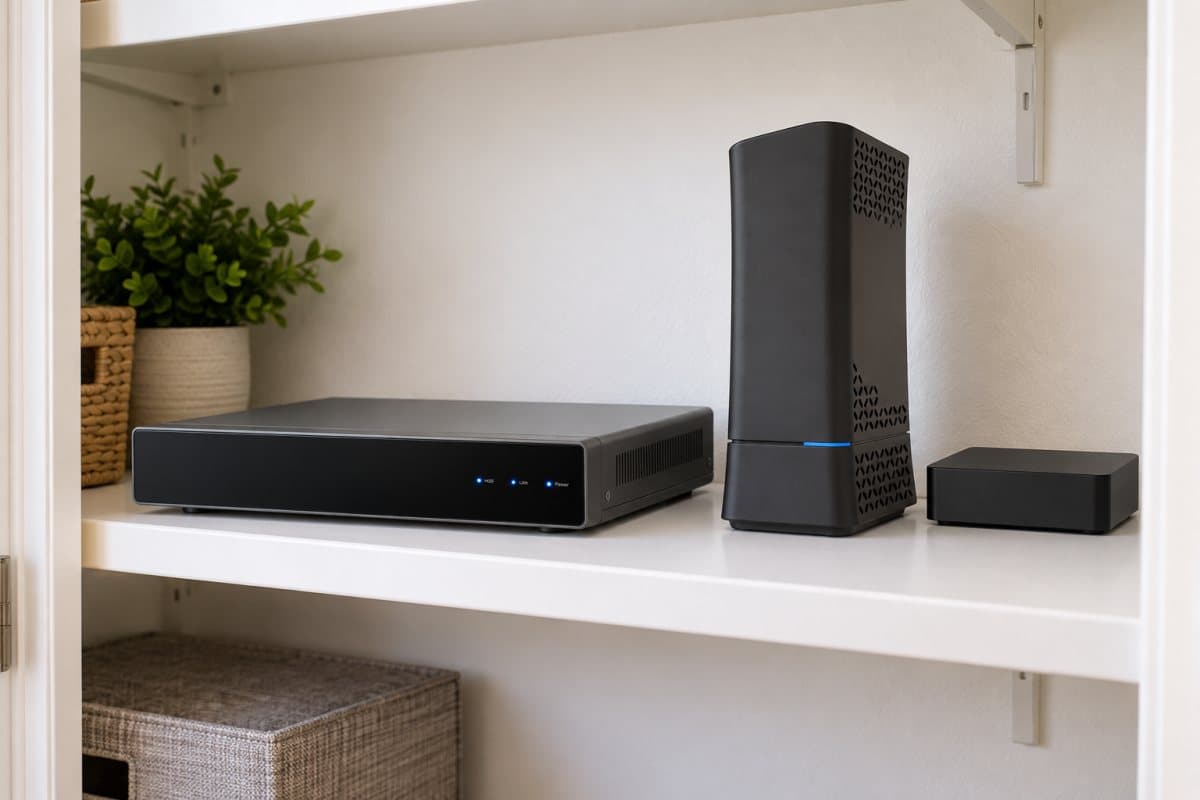
- The recorderWe install the recorder and its drive on a shelf in your house.
- The installationWe run the cable, mount the cameras, seal the holes, and test every detection zone.
Local recorder
- Records in your house
- 2 TB drive included
- Wi-Fi enabled
- 24/7 recording over PoE
- 8 channels, expandable to 16
- 2 TB drive included
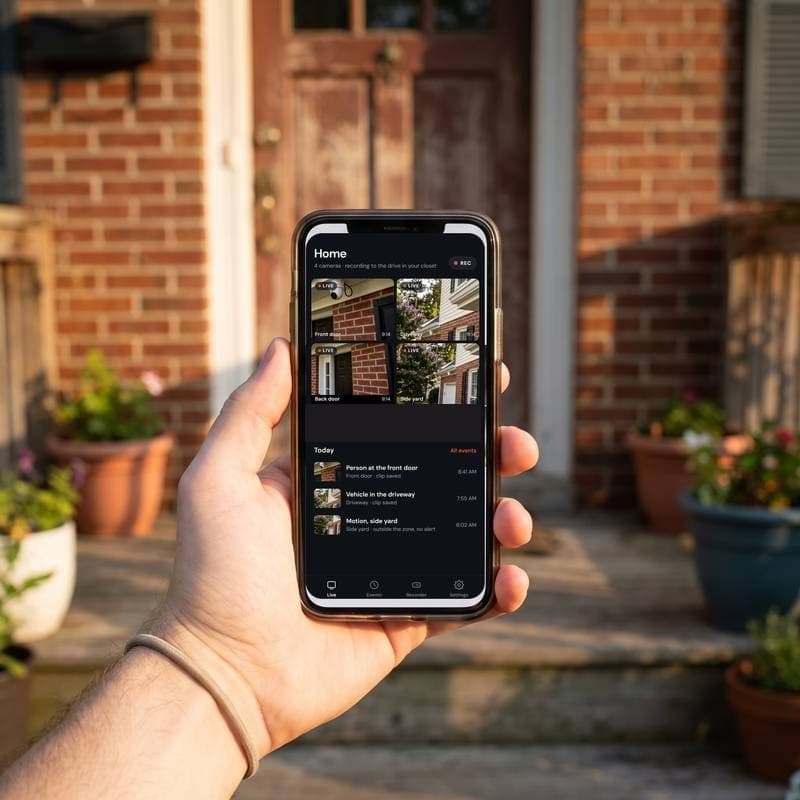
Mobile app
- Live view on your phone
- Clips and alerts
- Wired and wireless, one app
App and login setup, before we leave.
See the handoverYes. Live video and clips on your phone, anywhere. The house needs internet for it to work.
Five-year guarantee
- Free replacement
- All equipment
- No service fee
If anything in the system breaks or stops working, we replace it free.
Read the guarantee- The camerasEvery camera on the system, the doorbell included.
- The recorderThe recorder and the drive inside it.
- The wiringThe wiring, re-run if a cable fails.
- A free walkthrough at your house
- Every camera placed with you
- The estimate, from what was placed
- Installation and handover, the same company
Wired CCTV. Installed to last.
We install turret, bullet and pan-tilt cameras, a wired doorbell, and a recorder in your house.
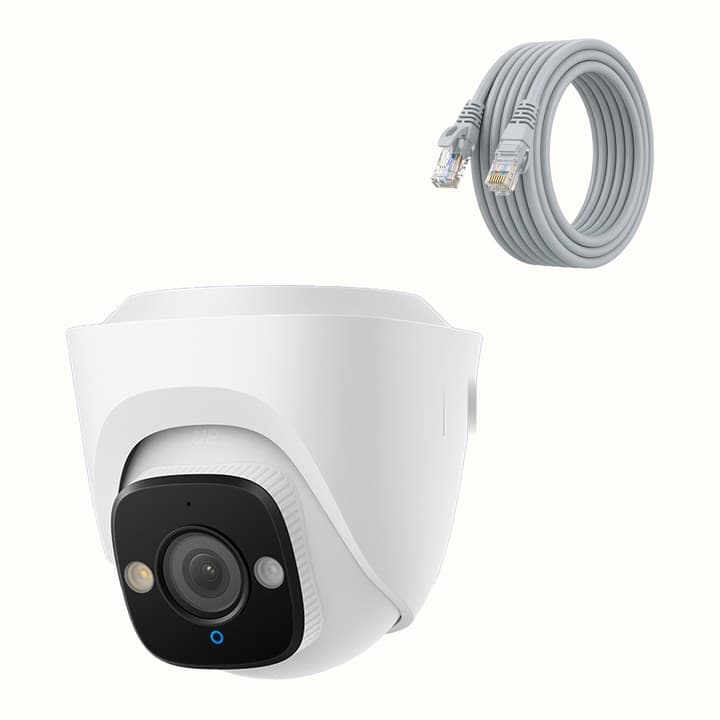
Turret
Front door, back door, faces- 4K Ultra HD video
- Color night vision
- Two-way audio
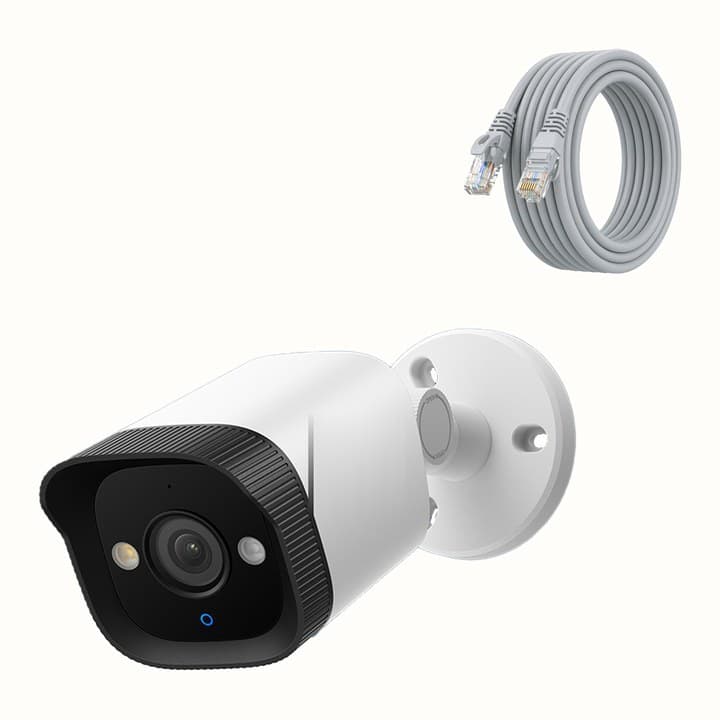
Bullet
Driveway and long sight lines- 4K Ultra HD video
- 5× digital zoom
- IP67 weather resistance
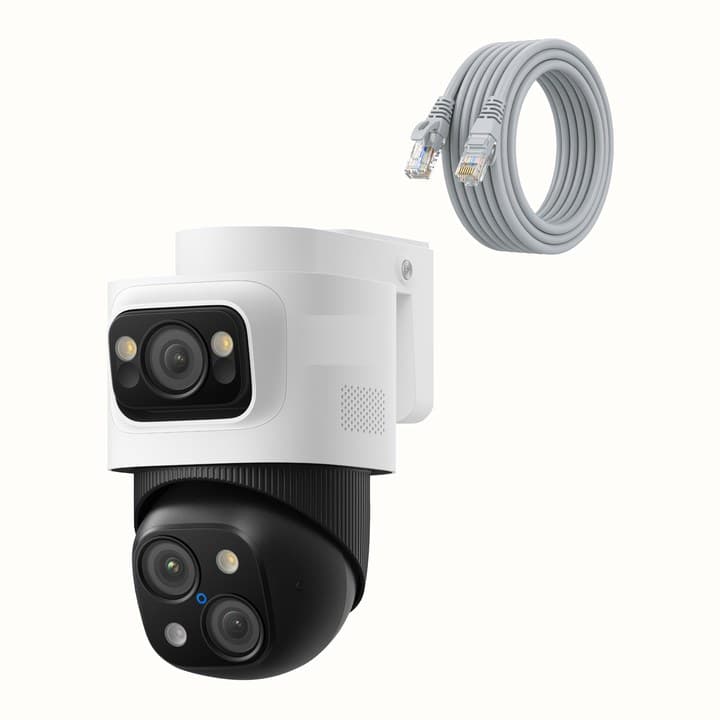
Bullet + pan-tilt
Perimeter and the rear corner- 4K overview with dual 2K pan-tilt
- 360° pan and 70° tilt
- Automatic subject tracking
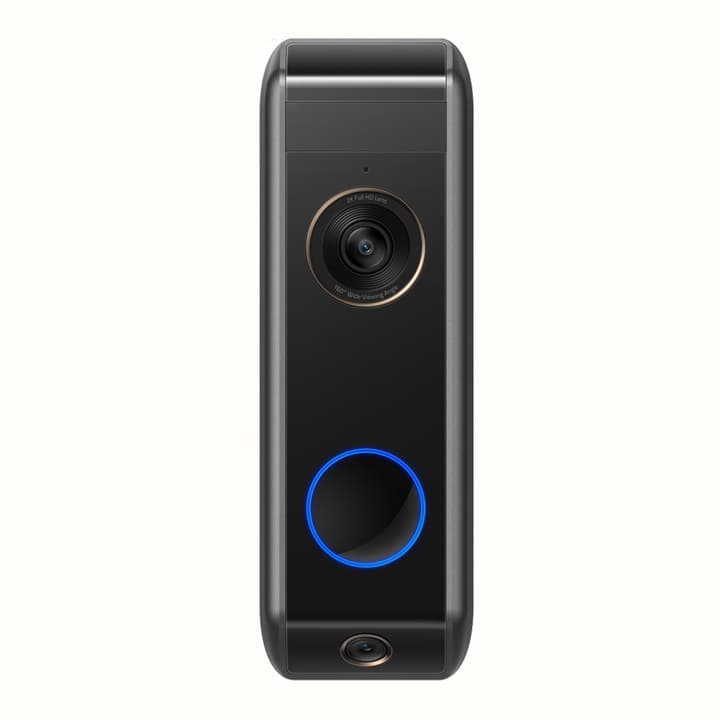
Wired doorbell
The front door, at the door- 2K resolution
- Color night vision, to 16 ft
- Two-way audio
- Package detection
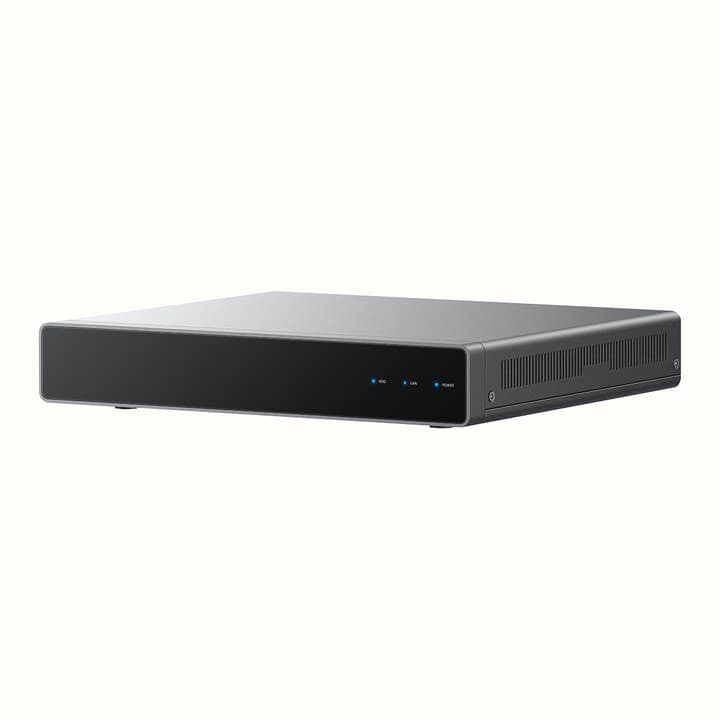
The recorder
A shelf in your closet- 24/7 recording over PoE
- 2 TB drive included
- 8 channels, expandable to 16
Representative equipment. The exact units are shown on the walkthrough.
How it is installedWireless cameras.
Four cameras and a hub.
Four solar-charged cameras and a hub, on the same app as the wired cameras. We check mounting, sunlight and signal on the walkthrough.
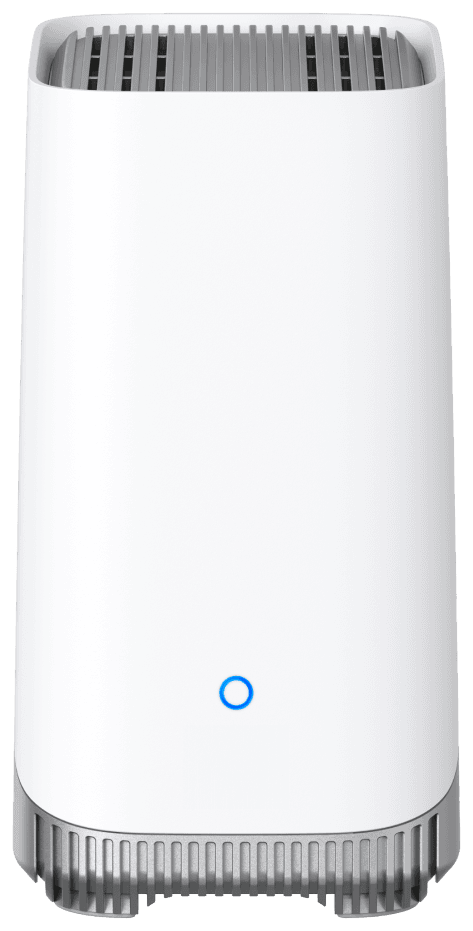
- 4K UHD
- Solar with rechargeable battery
- 360° pan-and-tilt coverage
- Hub included, 16 GB built in
- Human and vehicle tracking
- Two-way audio
- Motion-activated spotlight
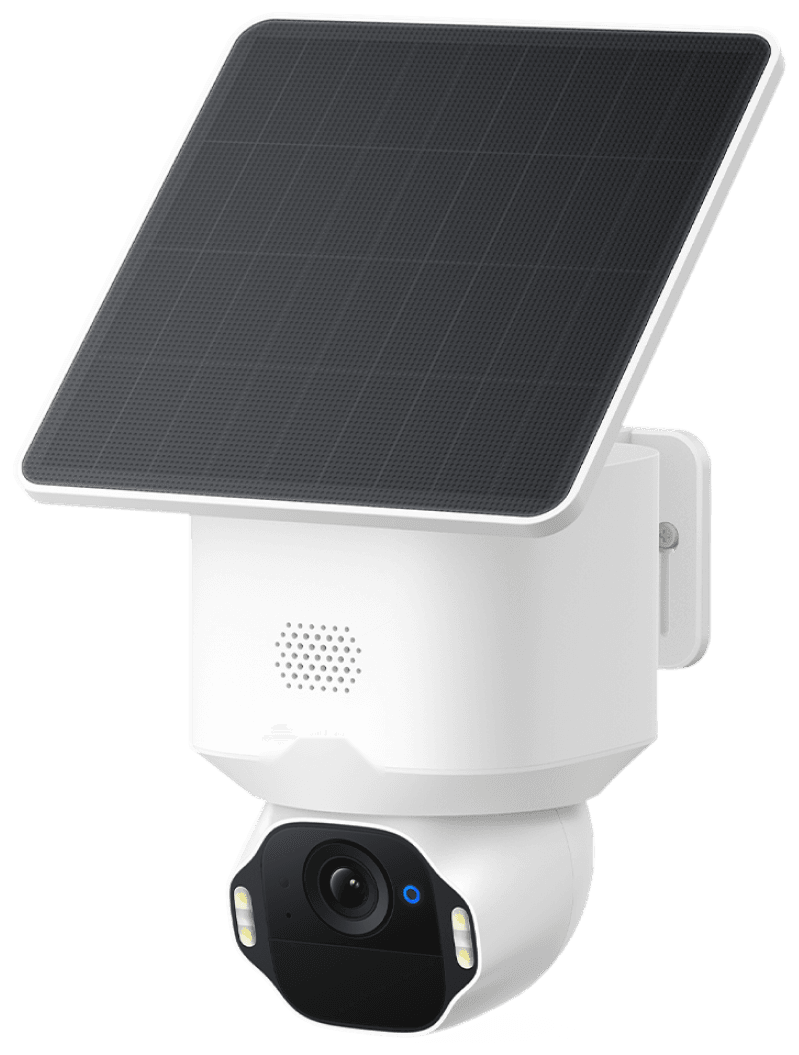
Representative equipment. The exact units are shown on the walkthrough.
What a properly installed
system looks like.
Where each part of the system gets installed on your house.
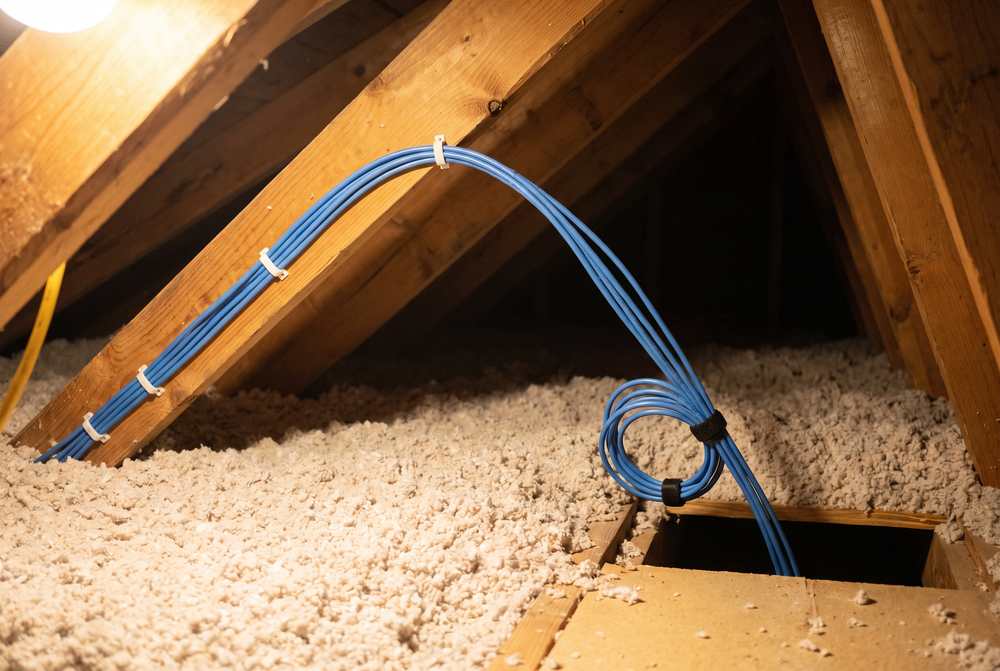
The cable run
We staple the cable along the attic framing and leave spare cable coiled at each camera.
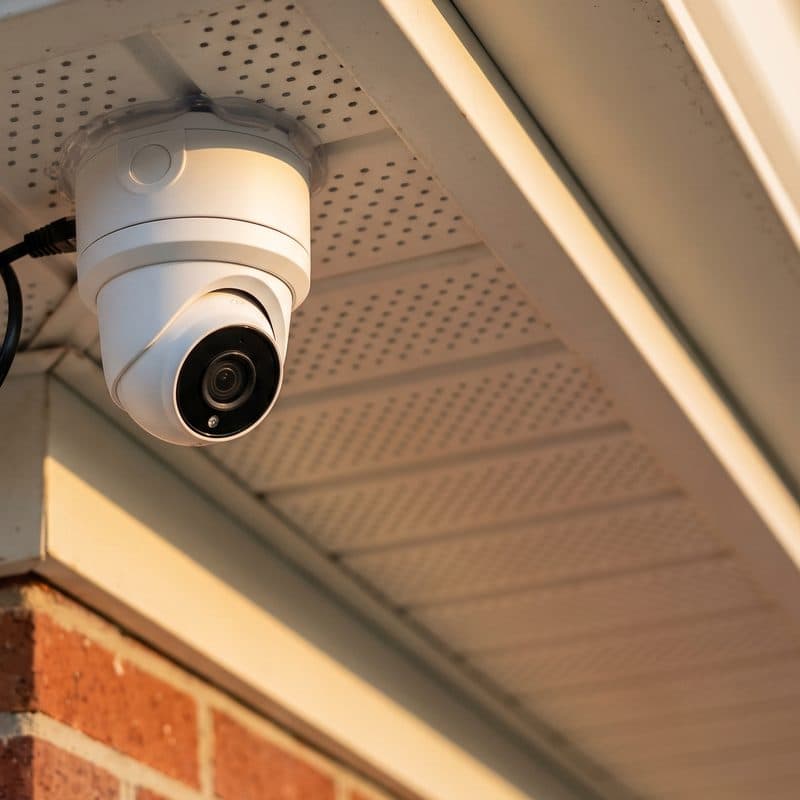
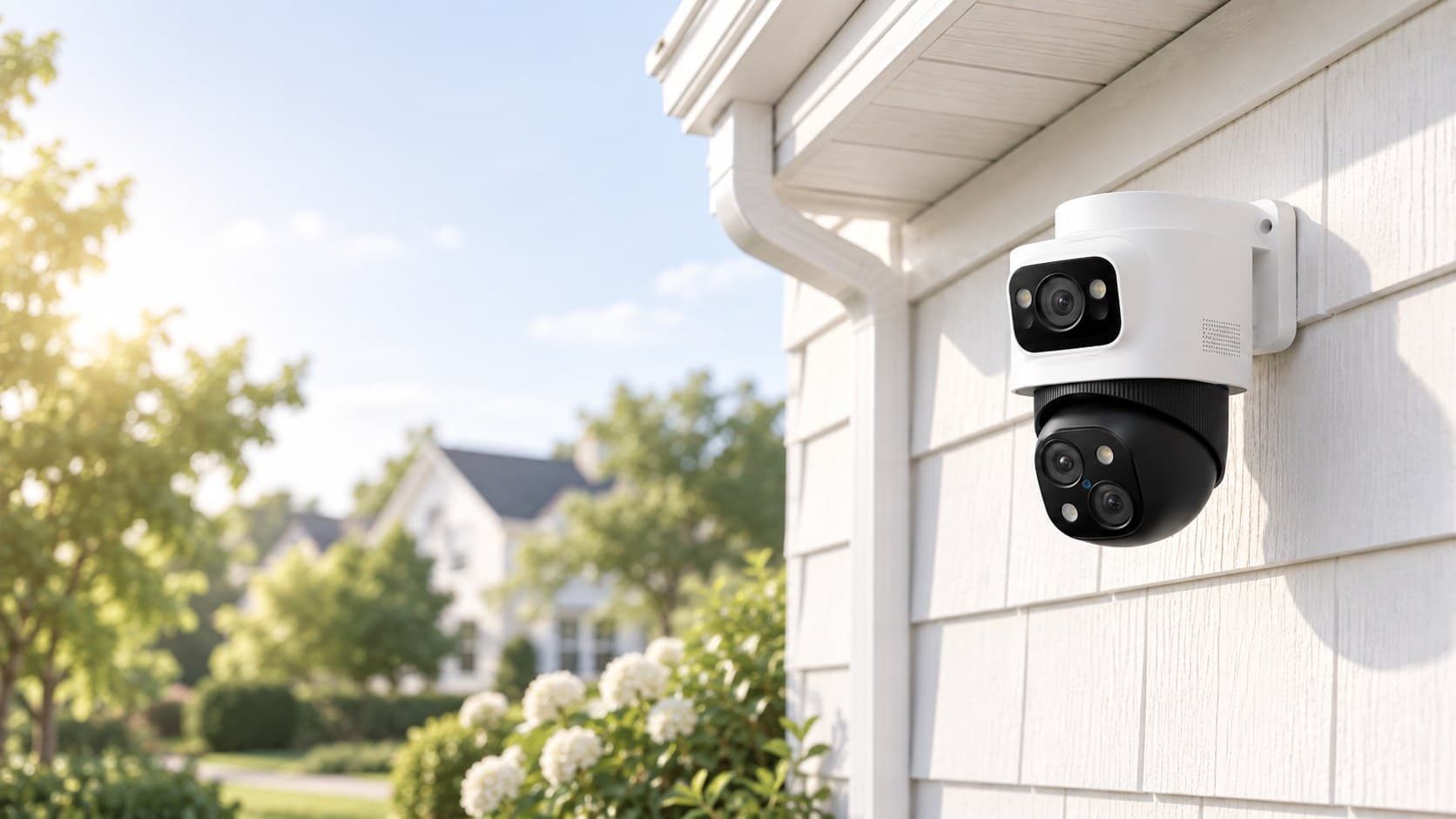
The camera at the eave
We mount the camera flush to the soffit and level, one cable into the base, and set it lower at the doors so it catches a face.
The recorder, in your closet
The recorder saves everything to its own drive, in your house.
Your phone, anywhere
Live view and clips from anywhere, set up together before we leave.
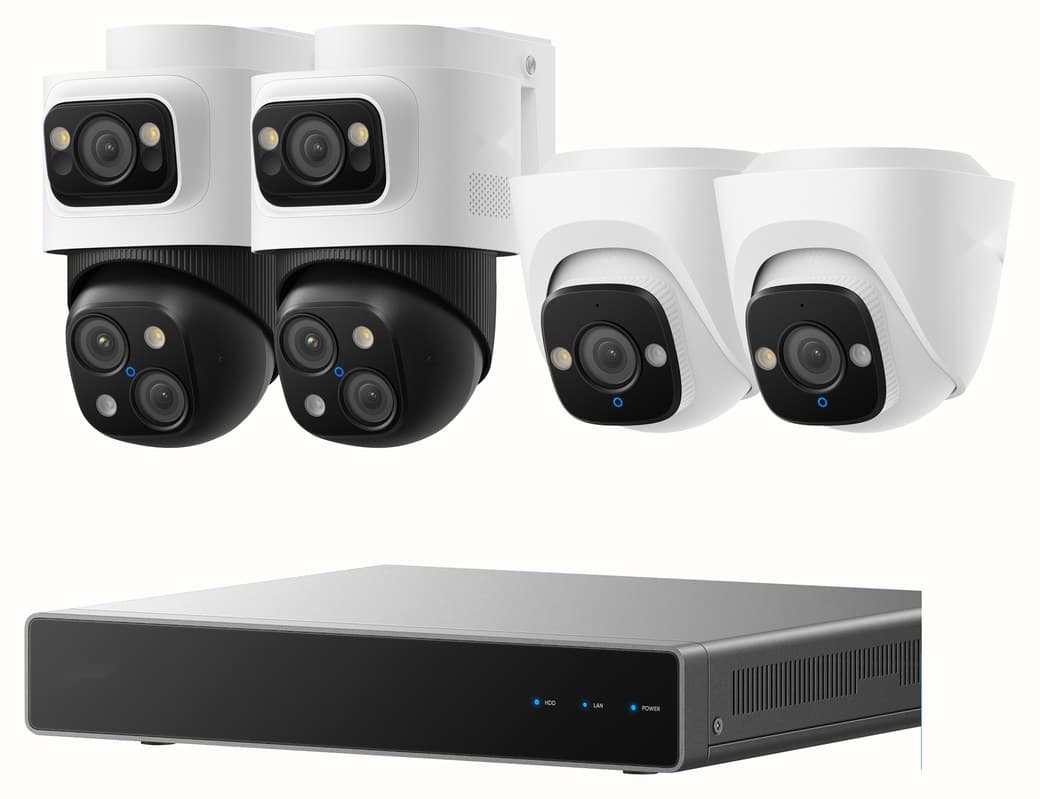
The whole-home kit, installed and done right.
The kit is half the job. We place the cameras, run the cable, set the angles, draw the detection zones, and set up the app.
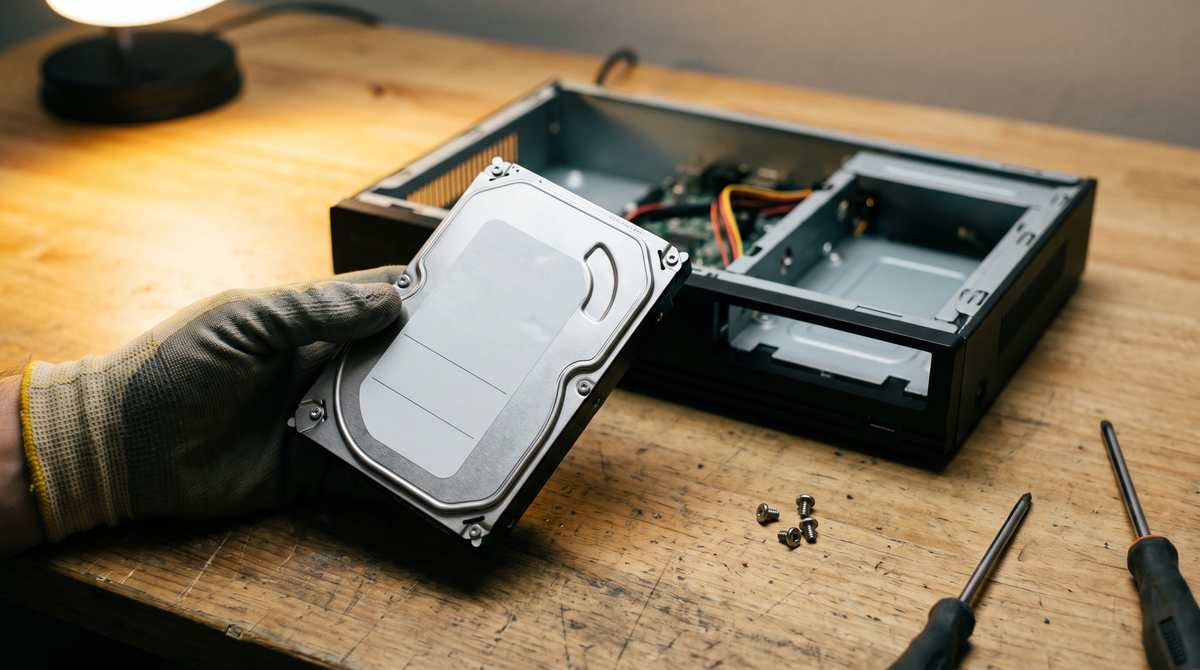
Your drive, in your recorder
2 TB drive included. 8 channels, expandable to 16. The footage is on a drive you can hold, in your house.
Pricing
Starting at $39.99 a month.
Here is what moves the estimate up or down.
How many cameras
Every camera is a cable run, a sealed hole, a mount, and a detection zone. Four covers most houses, and we settle the count with you on the walkthrough.
Attic, crawlspace, or neither
An attic or a crawlspace makes the run quick. A slab house with no attic takes longer.
Brick, siding, or stone
Each takes a different hole and a different seal.
Distance to the recorder
A long run costs cable and time. The closet is chosen with you.
A wired doorbell
Goes in where doorbell power is already at the door.
Second story and steep pitches
A second story or a steep pitch takes a taller ladder and more time on the wall.
The walkthrough is free, and the estimate comes from it.
Request an appointmentBased in Garner.
13 service areas.
Garner, NC. We serve Raleigh and the surrounding Piedmont, Burlington to Goldsboro.
The same wired system in every town on the list: a local recorder in the house, the app on your phone, and the five-year guarantee.
Garner is the base. The Garner page.
Local notes.
Open what you need.
The local things that change a Raleigh install, each with the source it came from. Open a panel to read it.
Where a Raleigh incident gets reported, and who sees your footage afterward
The Raleigh Police Department's official reporting page links an online crime-reporting system for specific incident types, including property damage, theft from a vehicle, vehicle damage, lost property, stolen property, harassing calls, and hit-and-run damage. Eligibility rules apply to each category, and not every incident qualifies for the online form.
Connect Raleigh is a resident camera-registration program the city runs. Registering a home security camera at Level 1 tells investigators the camera exists; if footage could help a case, an investigator contacts the registered owner directly. No live feed is shared, and registering is not the same as filing an incident report.
Who signs off on the permit inside Raleigh city limits
Raleigh issues and inspects its own residential permits instead of routing them through Wake County. The City of Raleigh Planning and Development department is responsible for residential and nonresidential permitting and inspections across the city. A homeowner running new wiring for an exterior camera pulls that permit from the city department, not the county.
How old Raleigh's housing stock is, and what that means for a cable run
A secondary estimate puts the median built year for Raleigh's occupied homes at 1997; citywide, 45.1 percent of all housing units were completed in 2000 or afterward. That leaves a majority of Raleigh's houses built before the current century.
A house from the late 1990s puts an attic above a two-story frame that spans the entire roofline, giving a camera mounted near the roof edge a clear path down through that attic to an interior wall and on to a panel, rather than a run cut into a slab. A house built after 2000 is somewhat more likely to already have some low-voltage wiring in place from construction, shortening that same run.
What Raleigh's lighting ordinance requires of exterior fixtures
Raleigh's Unified Development Ordinance addresses exterior lighting in two provisions. UDO §7.4.6 requires floodlights to be aimed downward or shielded. UDO §7.4.10 requires building and security lighting to focus on the property's own site features, kept away from adjoining lots and the street, and requires full-cutoff wall pack fixtures.
5401 North: a growth cluster inside Raleigh
5401 North is a developer-described Raleigh community that combines single-family homes and apartments. It represents part of the newer construction added to Raleigh's housing stock from 2000 onward, alongside the city's existing neighborhoods.
Raleigh questions
Is there a camera registry in Raleigh?
Yes. Connect Raleigh lets a resident register a home security camera. Level 1 registration tells investigators the camera exists, and an investigator contacts the owner directly if footage could help an active case. No live feed is shared automatically.
Who inspects a residential permit inside Raleigh?
The City of Raleigh Planning and Development department, not Wake County. It handles residential and nonresidential permitting and inspections across the city.
Does Raleigh limit exterior security lighting?
Yes. UDO §7.4.6 requires floodlights to be aimed downward or shielded, and UDO §7.4.10 requires building and security lighting to stay focused on the property and off adjoining lots and the street.
How old is the median Raleigh house?
A secondary estimate puts the median built year for occupied Raleigh homes at 1997; fewer than half of Raleigh's housing units were built after 1999.