
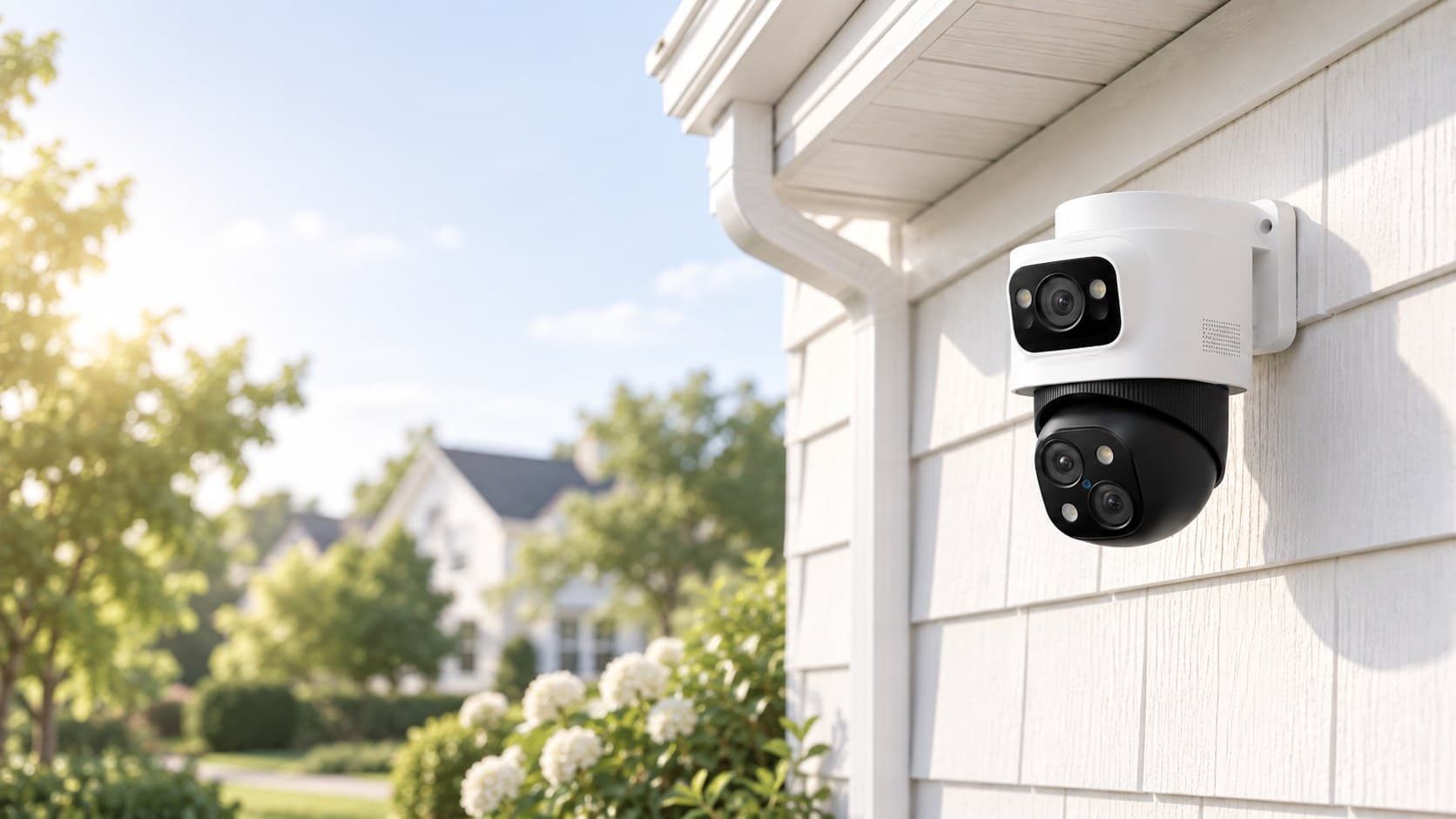
Where to place
cameras on a house.
Put a camera at every way a person can reach the house on foot: the front door, the driveway, the back door, the side yard, the rear corner, the package drop, and the door itself. Mount them at 8 to 9 ft, tilted 15 degrees down, aimed at the approach rather than at the door. Height is what decides whether a recording shows a face or the top of a hat.
- Free walkthrough
- No long-term contract
- Install and equipment included
Garner, NC. We serve Raleigh and the surrounding Piedmont, Burlington to Goldsboro.
The pricing page- The camerasPlaced with you on the walkthrough.
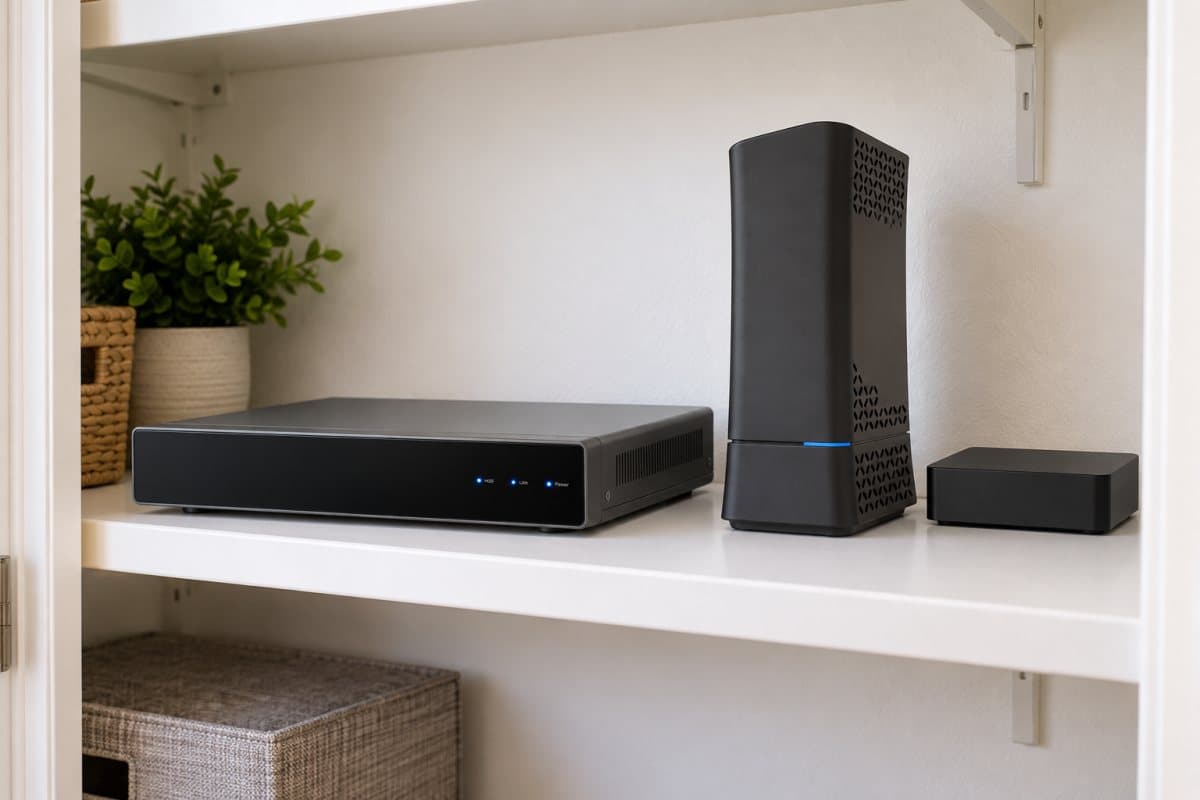
- The recorderWe install the recorder and its drive on a shelf in your house.
- The installationWe run the cable, mount the cameras, seal the holes, and test every detection zone.
Local recorder
- Records in your house
- 2 TB drive included
- Wi-Fi enabled
- 24/7 recording over PoE
- 8 channels, expandable to 16
- 2 TB drive included
Mobile app
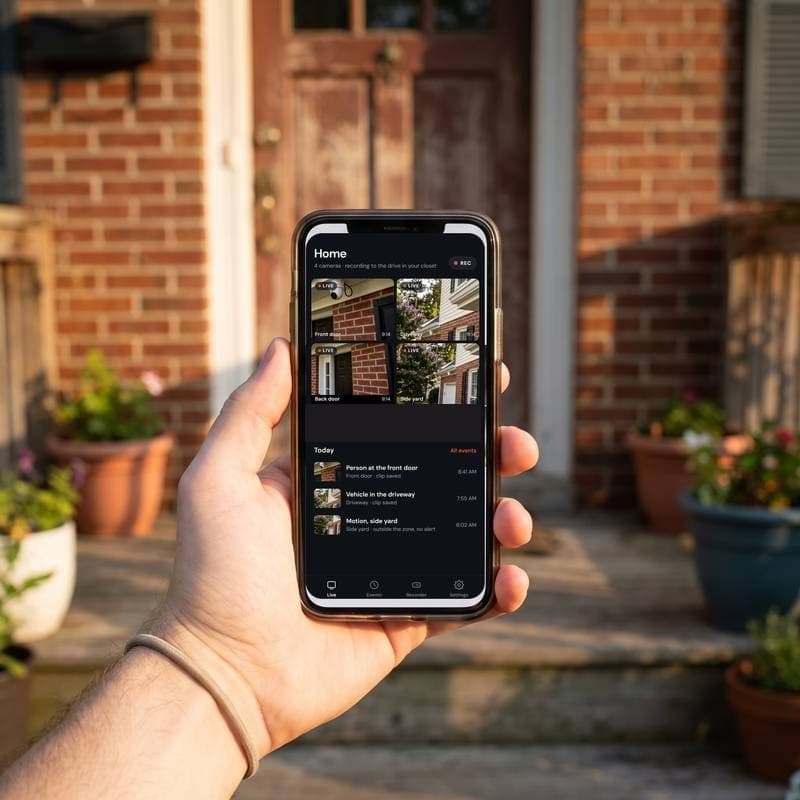
- Live view on your phone
- Clips and alerts
- Wired and wireless, one app
App and login setup, before we leave.
See the handoverYes. Live video and clips on your phone, anywhere. The house needs internet for it to work.
Five-year guarantee
- Free replacement
- All equipment
- No service fee
If anything in the system breaks or stops working, we replace it free.
Read the guarantee- The camerasEvery camera on the system, the doorbell included.
- The recorderThe recorder and the drive inside it.
- The wiringThe wiring, re-run if a cable fails.
- A free walkthrough at your house
- Every camera placed with you
- The estimate, from what was placed
- Installation and handover, the same company
Seven positions.
A height for each one.
A detached house has seven ways a person arrives on foot. Each one wants a different height, a different angle and a different frame. The table is the short answer. The sections under it explain each position.
| Position | Height | What it sees | What goes wrong here | |
|---|---|---|---|---|
| 1 | Front door | 8 to 9 ft | Everyone who walks up, from the moment they leave the sidewalk. | Mounted directly above the door and aimed straight down, it records the top of a hood. |
| 2 | Driveway | 9 to 10 ft | Vehicles at the curb and in the drive, and the walk from a car to the door. | Aimed down the drive, the lens looks into headlights every night and the plate washes out in the glare. |
| 3 | Back door | 8 to 9 ft | The rear approach, the patio, and the door itself. | Left off because the yard is fenced. |
| 4 | Side yard | 9 ft | The blind side of the house: the gate, the meter, the outdoor unit, and the path between the front and the back that nobody can see from either. | Aimed across the property line at a neighbor’s window. |
| 5 | Rear corner | 10 ft | The whole back of the property in one wide frame: the yard, the shed, the tree line, and both rear corners of the house. | Used as the only camera on the back of the house. |
| 6 | Package drop | 7 to 8 ft | The square of porch floor where a box actually lands, and the hand that picks it up. | Framed on the street so the porch is a corner of the picture. |
| 7 | Doorbell | 7 to 8 ft | The person standing at the door, close and straight on, at the height a person actually stands. | Treated as the front door camera. |
Scroll sideways for the rest of the table.
Heights are measured from finished grade to the center of the housing. A second-story eave changes the mount, not the number. These are the placement practices a wired install follows, not a record of jobs; the walkthrough sets the numbers for your house.
The full mounting specWhat each position sees,
and what it misses.
Each position has a job. The height and the angle decide whether the camera does that job. The positions run in the order a person would use them.
Front door
8 to 9 ftMounting height.Everyone who walks up, from the moment they leave the sidewalk. The approach is the recording that identifies a person; the knock is the one that tells you they arrived.
Aim. Set back 6 to 10 ft from the door and tilted 15 degrees down, so the walk up is in frame before the person is.
Driveway
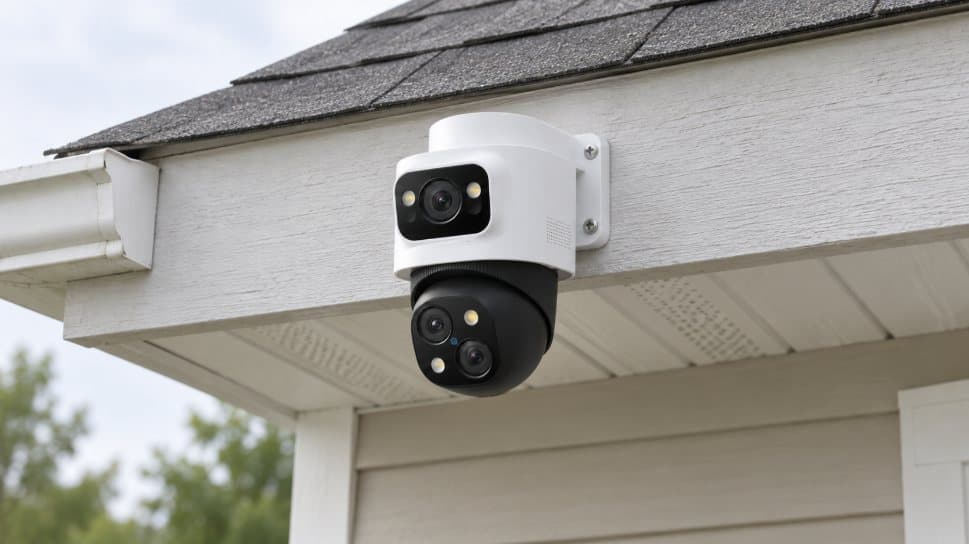
9 to 10 ftMounting height.Vehicles at the curb and in the drive, and the walk from a car to the door. A bullet housing on this position is visible from the street on purpose.
Aim. Aimed across the driveway rather than straight down it, so a vehicle crosses the frame instead of driving into it.
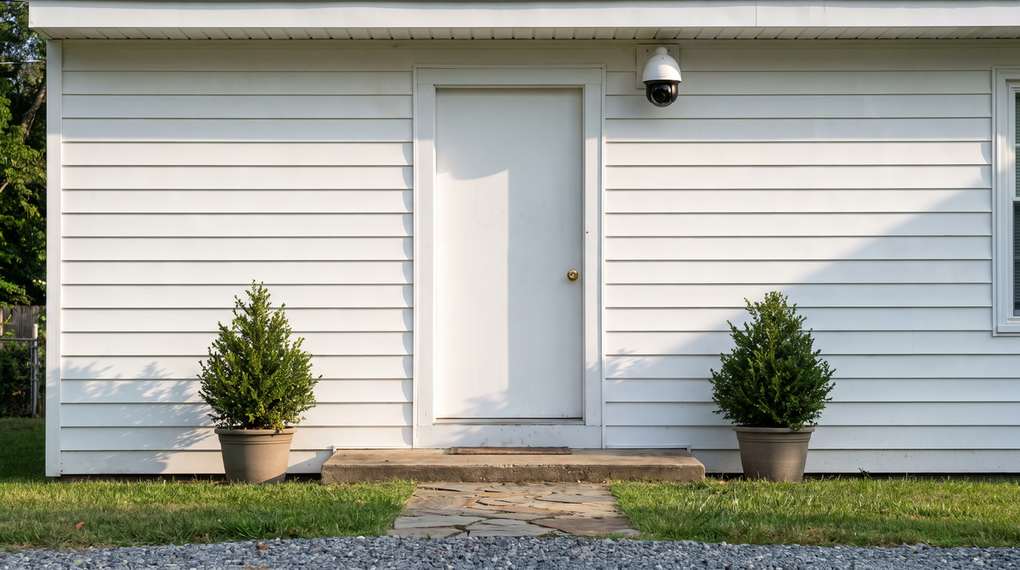
Back door
8 to 9 ftMounting height.The rear approach, the patio, and the door itself. This entry is out of sight from the street, so it is worth recording.
Aim. Same geometry as the front: back from the door, tilted 15 degrees down, holding the last few steps of the approach.
Side yard
9 ftMounting height.The blind side of the house: the gate, the meter, the outdoor unit, and the path between the front and the back that nobody can see from either.
Aim. Aimed along your own wall, down the length of the run, so the frame fills with your own ground.
Rear corner
10 ftMounting height.The whole back of the property in one wide frame: the yard, the shed, the tree line, and both rear corners of the house.
Aim. Higher than the door positions and wider, because this camera is for coverage rather than identification.
Package drop
7 to 8 ftMounting height.The square of porch floor where a box actually lands, and the hand that picks it up.
Aim. Lower and closer than the front door camera, angled at the step rather than at the street.
Doorbell
7 to 8 ftMounting height.The person standing at the door, close and straight on, at the height a person actually stands.
Aim. At the existing button height on the existing chime circuit, which is what a wired doorbell runs on.
Two rules can move a position.
One reaches the street-facing positions. One reaches the door. Both get settled before anything is fixed to a wall.Covenants can restrict an exterior mount
A recorded covenant can govern what is fixed to a street-facing elevation. Read yours before the front and driveway positions are fixed, because those two are the ones it reaches.A doorbell has a microphone
A wired doorbell records audio as well as video, and North Carolina’s rules on recording audio are a separate question from where a camera points. Read the statute before a microphone goes at a door where conversations happen.The numbers behind
every position above.
Five numbers that decide whether the picture is usable and whether the hole in the wall stays dry. These are the placement practices a wired install follows, not a record of jobs; the walkthrough sets the numbers for your house.
Three rules for
camera placement.
Based in Garner.
13 service areas.
Garner, NC. We serve Raleigh and the surrounding Piedmont, Burlington to Goldsboro.
The same wired system in every town on the list: a local recorder in the house, the app on your phone, and the five-year guarantee.
Garner is the base. The Garner page.